
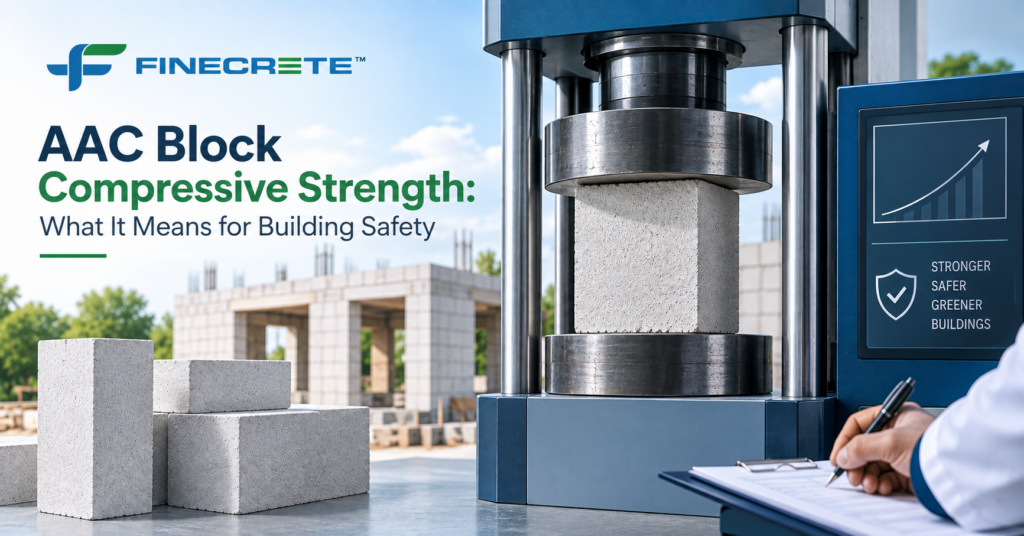
AAC block compressive strength is one of the specs that actually matters when you’re choosing blocks for a home or construction project. For a family building a new house, the question underneath it all is simple will these walls actually hold up and keep everyone inside safe for years to come?
Picture watching your home take shape, course by course. Foundation’s done, columns are up, and the mason starts laying blocks. At this stage it’s easy to fixate on size, price, or delivery timing. But behind every finished wall sits a more important question whether the block you picked was actually suited for the job in the first place.
Understanding AAC block compressive strength helps you look past the price tag and choose blocks based on their intended use, grade, and how they actually tested not just what sounds good on a sales call.
What Is AAC Block Compressive Strength?
AAC block compressive strength is basically how much pressure an AAC block can take before it fails or gets damaged under compressive load.
In plain terms, it tells you how much force the block can handle under a standard test.
Usually expressed in N/mm² (MPa).
A higher number doesn’t automatically mean a block’s the right pick for every wall, by the way. The correct spec depends on the building design, wall application, structural needs, and whatever standards apply to your project.
That’s exactly why homeowners shouldn’t just grab whichever product has the bigger number on the spec sheet. The block needs to actually suit the work it’s meant to do.
Why AAC Block Strength Actually Matters for Your Home
Building a home, strength’s naturally near the top of your worry list.
You want walls that stay stable, finishes that hold up properly, and a building that serves your family for decades. AAC block strength is one part of figuring out whether the material you picked actually fits the masonry work at hand.
But block strength on its own doesn’t determine how a finished wall performs.
Workmanship, block quality, jointing material, wall design, structural detailing, moisture management, proper installation all of it plays a part. Having the right tools on site matters here too, which is exactly what this piece on AAC Blocks and Construction gets into why the right tools make such a difference to how consistently a wall actually comes together.
A strong block, installed badly, can still leave you with poor masonry.
Which is why it’s smarter to think about the wall as a whole system, rather than fixating on one spec in isolation.
How AAC Block Grade Relates to Strength
AAC block grade is worth understanding when you’re comparing products.
Different grades come with different performance characteristics and intended uses. The grade and declared compressive strength should get checked against the actual product documentation and your project’s requirements not just taken on faith.
When buying AAC blocks, ask the supplier for the declared grade, compressive strength info, density, block dimensions, relevant test reports, and applicable standards or certification details.
This gives your engineer or contractor what they need to actually determine whether the product suits your intended masonry work.
Don’t settle for a verbal assurance that the blocks are “strong.” Ask for the paperwork that backs it up.
AAC Block Strength vs Wall Strength
Worth drawing a clear line here.
AAC block strength describes how the individual block performs under compression. The finished wall, though, is a whole system blocks, joints, openings, connections, finishes, and everything else layered on top.
Picture a row of carefully placed blocks. If the blocks themselves are solid but the joints are prepped poorly, the finished masonry can still fall short of what you expected.
That’s exactly why correct installation matters so much.
The first course needs proper alignment. Blocks should go in following the recommended method, with the right jointing material used throughout. Regular checks for level and vertical alignment help stop small problems from spreading through the entire wall.
AAC Blocks vs Red Bricks Strength: Is One Actually Stronger?
People search for AAC blocks vs red bricks strength a lot, mostly because red brick’s familiar and AAC blocks still feel like the newer alternative to a lot of buyers.
But comparing the two using just one compressive-strength number can genuinely mislead you.
AAC blocks and traditional red bricks are different materials entirely different densities, dimensions, manufacturing processes, construction characteristics. Which one actually suits your project depends on the application and the specific products being compared, not a single headline number.
Instead of asking “which one’s stronger,” a more useful question is: “which material actually meets what my project needs?”
A proper comparison factors in compressive strength, density, wall design, thermal properties, weight, dimensions, installation method, workmanship, and applicable standards together, not one at a time.
For a family building a home, that broader comparison gives you a much clearer picture than obsessing over one number.
How to Check AAC Block Compressive Strength Before Buying
Before placing a large order, ask your supplier for product and quality information upfront.
A useful checklist: confirm the AAC block grade, ask for the declared compressive strength, check the density, verify block dimensions, request test reports, check applicable standards and certification, inspect a sample where you can, and confirm the product actually suits your intended wall application.
Finecrete’s reference material also stresses checking product documentation and batch information before committing to a large order and recommends asking for test reports and inspecting samples before releasing any advance payment.
This approach gives you a lot more confidence than picking a supplier purely because they quoted the lowest number.
Does Higher AAC Block Compressive Strength Always Mean Better?
Not necessarily.
It’s tempting to assume the strongest block available must automatically be the best choice. But construction materials need picking based on their actual intended use, not bragging rights on a spec sheet.
Say a particular wall has a specified performance requirement choosing a product that meets that requirement makes a lot more sense than paying extra for strength your project simply doesn’t need.
Your engineer or architect can help pin down the right AAC block grade and strength requirement for your specific project.
The goal isn’t buying the strongest block on the market.
It’s buying the right block for the right job.
What Can Actually Affect AAC Block Strength?
The reported AAC block compressive strength comes out of testing, sure, but how blocks actually perform once they hit your construction site also depends on manufacturing consistency and handling along the way.
Factors that matter: manufacturing quality, material composition, density, curing and production process, dimensional consistency, storage conditions, transportation and handling, and the age and condition of the blocks by the time they’re actually used.
This is exactly why supplier selection carries real weight.
A supplier should be able to walk you through the product’s specs and hand over proper documentation, rather than expecting buyers to just take a sales claim at face value.
Why Handling and Transportation Actually Matter
Picture ordering several truckloads of AAC blocks for your new home. They leave the plant in perfect condition, but poor handling during loading, transport, or unloading causes damage that never should’ve happened.
That creates avoidable wastage and makes it harder for the masonry team to keep their work consistent.
Finecrete’s reference content raises a similar concern for bulk AAC orders freight, breakage, delivery delays, and handling all chip away at the real value of what you’re buying.
Which is why product quality and logistics really need to be considered together, not as separate boxes to tick.
A dependable supplier should have an organised process for dispatch, batch identification, delivery, and dealing with any damaged material along the way.
AAC Block Strength and Proper Installation
Even when you’ve picked a product with the right AAC block compressive strength, installation still decides a lot of the outcome.
Workers should follow the manufacturer’s recommended installation method. The base needs proper prep, the first course needs careful alignment, and every course after it needs to maintain the required bond and alignment.
The recommended AAC block adhesive or jointing mortar also needs to be mixed and applied correctly getting the quantity right matters here too, and this guide on AAC Block Adhesive Consumption walks through how to actually work that number out before ordering.
Too much or too little bonding material, uneven joints, poor alignment any of these can chip away at the quality of your finished masonry.
For homeowners, worth remembering: buying good blocks is only step one. Good installation is what actually finishes the job.
Choosing AAC Blocks for Different Projects
The right AAC block genuinely varies depending on what you’re building.
A small family home has different masonry requirements than an apartment building, commercial property, warehouse, or institutional project.
If you’re sourcing AAC blocks in Punjab, for instance, talk through the wall application and required specs with your supplier before ordering. Same principle applies whether you’re buying locally or sourcing from a manufacturer that serves multiple regions.
A good supplier asks about your project first, rather than jumping straight to recommending whatever’s cheapest on the shelf.
Questions Worth Asking Your AAC Block Supplier
Before finalising your purchase, ask: What’s the AAC block grade? What’s the declared AAC block compressive strength? What’s the density? Can you provide test reports? Are the blocks manufactured consistently? What are the exact dimensions? How should the blocks be stored? What jointing material do you recommend? How do you handle damaged blocks during delivery? And can I inspect a sample before placing a bulk order?
These questions help you make a more informed call, and give your contractor the information they actually need for proper installation down the line.
Frequently Asked Questions
1. What is AAC block compressive strength?
It’s the ability of an AAC block to withstand compressive force before failing under a standard test, usually expressed in N/mm² or MPa.
2. What is AAC block grade?
It identifies a product’s specified performance category and points toward its intended application. The right grade should be picked based on your project’s requirements and the product documentation.
3. Are AAC blocks weaker than red bricks?
Not necessarily. AAC blocks vs red bricks strength should be compared using the actual specs of the specific products involved, along with density, application, wall design, and other relevant performance factors not one isolated number.
4. Does higher AAC block strength always mean better quality?
No. The right strength depends entirely on the application. A block should meet what your project actually needs, rather than simply carrying the highest strength value available.
5. How can I verify AAC block strength before buying?
Ask the supplier for the declared compressive strength, AAC block grade, relevant test reports, density information, and other documentation. A sample inspection helps too, if it’s practical for your order size.
6. Does installation affect AAC block strength in a wall?
The tested strength of an individual block is a material property on its own, but how the completed masonry actually performs depends on the whole wall system block quality, joints, alignment, workmanship, and design all together.
Build With Information, Not Just a Price Tag
For a family building a home, every construction decision deserves a bit of care. You’ll compare prices, talk to contractors, visit a few suppliers but the thing that actually matters most is knowing what you’re buying in the first place.
AAC block compressive strength gives you useful insight into how the block resists compression. But it should always sit alongside AAC block grade, density, dimensions, quality documentation, installation practices, and whatever your specific project actually requires.
If you’re weighing AAC blocks vs red bricks strength, don’t stop at one number. Look at the full construction system and ask which material genuinely suits your application. Beyond blocks and mortar, it’s also worth knowing how adaptable modern adhesives have become across a build this piece on 5 Innovative Uses Of Tile Adhesive In Modern Construction is a good next read once your walls are up and finishing work begins.
Finecrete can help you approach AAC block selection with a bit more clarity factoring in the product spec, quality information, supply requirements, and the practical realities of your construction project.
Because when you’re building a home for your family, picking the right material isn’t just about finishing the next wall. It’s about making a decision you can still feel good about long after construction wraps up.