
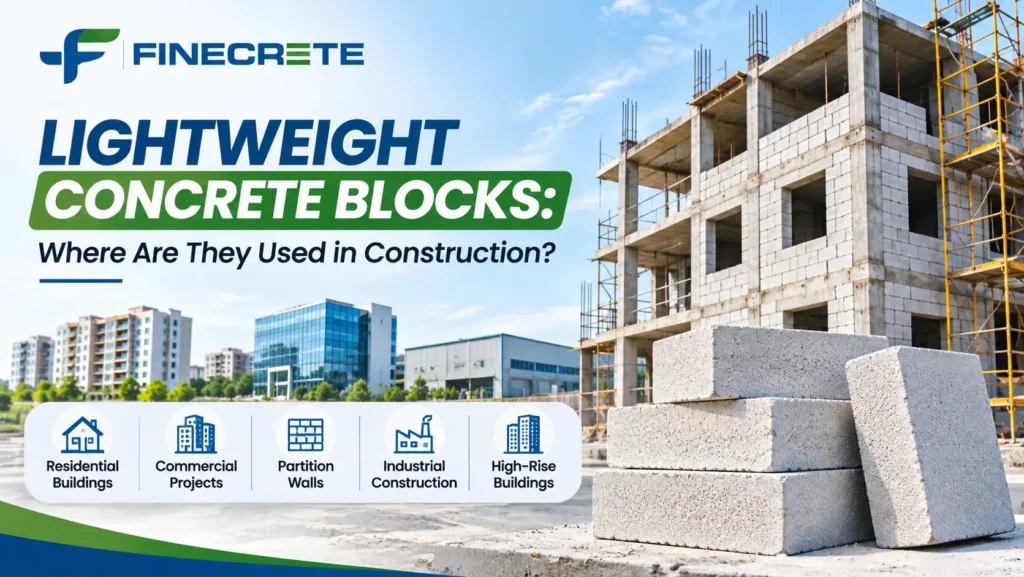
Lightweight concrete blocks changed Mr. Iyer’s plan halfway through a site meeting. He and his wife wanted to add two floors on top of an older house. The engineer walked around, tapped a few walls and said, “The structure can only carry so much.” The mason shrugged and said bricks had always worked. The engineer said, “Try something lighter.” The Iyers, who are an example we’re using, had never heard of such a thing.
So where do these blocks actually get used? That’s what we’ll go through here. We’ll cover what they are, where lightweight blocks for construction make sense, how to lay them well, and how to pick finishing materials, including a granite manufacturer in India for floors and counters. We’re the Finecrete team, and we answer these questions from builders and families almost every week.
What Are Lightweight Concrete Blocks?
Lightweight concrete blocks are building blocks made with air or light materials, so they weigh much less than solid concrete or clay bricks. The common types are AAC blocks, foam (cellular) concrete blocks and blocks made with light aggregates.
In short, three families:
- AAC blocks: cured in steam, full of tiny air pockets
- Cellular (foam) concrete blocks: made by mixing foam into the concrete
- Light-aggregate blocks: made with things like expanded clay or pumice
In India, AAC is the one you’ll hear about most, and it often comes up when people talk about green building blocks. If you want to know why, our guide on Green Building Blocks explains it.
Lightweight Blocks for Construction: Where They Work Best
Lightweight blocks for construction are used for partition walls, infill walls, outer walls and added floors in houses, apartments, schools and offices. They reduce the load on the structure and speed up the work. For load-bearing use, a structural engineer must confirm the design.
Builders ask us the same thing all the time: “Where can I actually use them?” Here are the usual places:
- Inner partitions in homes, offices and hospitals
- Infill walls between beams and columns
- Outer walls in low and mid-rise buildings
- Extra floors on existing buildings, where weight matters
- Walls where heat or noise needs to be controlled
Where not to use them: foundations, and spots that stay wet all the time.
Why do builders choose them? The Iyers’ engineer put it simply. A lighter wall puts less weight on the beams and the foundation. That can mean less steel, easier lifting and faster work on the upper floors. Many of these blocks also keep heat out better than brick. Finecrete always adds a warning, though: all of that depends on good laying, so don’t skip the details.
Where to Buy: A Quick Look Around
If you’re building in the north, compare an AAC block manufacturer in Dehradun and see what’s on offer near you.
Closer to the capital? Look at an AAC block manufacturer in Delhi, and compare delivery times and test reports.
Laying Them Right: Mortar and Adhesive
Light blocks need the right glue. Thick sand-cement joints let heat through and weaken the wall. A proper Masonry Mortar for AAC Blocks keeps the joints thin and neat, and Finecrete suggests ordering it with the blocks, so one delivery covers both.
How much will you need? Our guide to AAC Block Adhesive Consumption shows the simple sums.
Tile and Stone: The Finishing Touches
Once the walls are up, finishing begins. For floors and bathrooms, a Tile Adhesive Manufacturer can supply an adhesive that holds the tiles firmly in place.
Granite Manufacturer in India: Matching Stone to Your Walls
A granite manufacturer in India supplies cut and polished slabs for floors, kitchen counters, steps and cladding. Ask to see real slabs, check the thickness, polish and edge quality, and confirm how the stone is packed and delivered.
Mrs. Iyer chose a dark granite for her kitchen counter. She wanted a surface that could take a hot pan without a fuss. When you speak to any granite manufacturer in India, ask a few simple things. Can I see the actual slab, not just a photo? Which finishes do you have: polished, honed or flamed? Is the thickness the same across the batch? How do you pack and deliver the slabs? Finecrete believes you should be able to touch the material before you commit.
Your Planning Checklist
- Decide where you need lightweight concrete blocks: partitions, infill or upper floors
- Ask for test reports and batch numbers for any lightweight blocks for construction
- Order thin-bed mortar with the blocks
- Work out AAC block adhesive consumption before you order
- Choose your tile adhesive manufacturer early
- Ask a granite manufacturer in India for sample slabs
- Compare the full landed cost, with GST and delivery
Frequently Asked Questions
Where are lightweight concrete blocks used in construction?
In partitions, infill walls, outer walls and upper floors of houses, apartments, schools and offices. Ask an engineer about load-bearing use.
Are lightweight blocks for construction strong enough?
For most walls in low and mid-rise buildings, yes. Check the compressive strength on the test report and match it to your design.
How do I choose a granite manufacturer in India?
Ask to see real slabs, check thickness and finish, and confirm packing and delivery. Finecrete can also help you compare options if you share your plan.
Do lightweight concrete blocks need special mortar?
Yes. A thin-bed masonry mortar for AAC blocks gives stronger, thinner joints than ordinary sand-cement mortar.
Are lightweight concrete blocks good for hot weather?
Many of them insulate well, so rooms stay cooler in summer. Thin joints and good plaster protect that benefit, and they are often counted among green building blocks.
Final Thoughts
Lighter walls can make a building easier to put up and often more comfortable to live in. Lightweight concrete blocks suit partitions, infill walls and added floors. Lightweight blocks for construction work best with the right mortar and plaster. If you’re comparing sources, look at an AAC block manufacturer in Dehradun and an AAC block manufacturer in Delhi side by side. And a good granite manufacturer in India will show you real slabs before you pay.
Share your plans with Finecrete, and we’ll help you choose materials that suit your home and budget. Call Finecrete on +91 97299 90555 to talk through your project.